Dana Bennett · 13 September 2026
Patterns in Referral Traffic Recovery Following Major Domain Updates
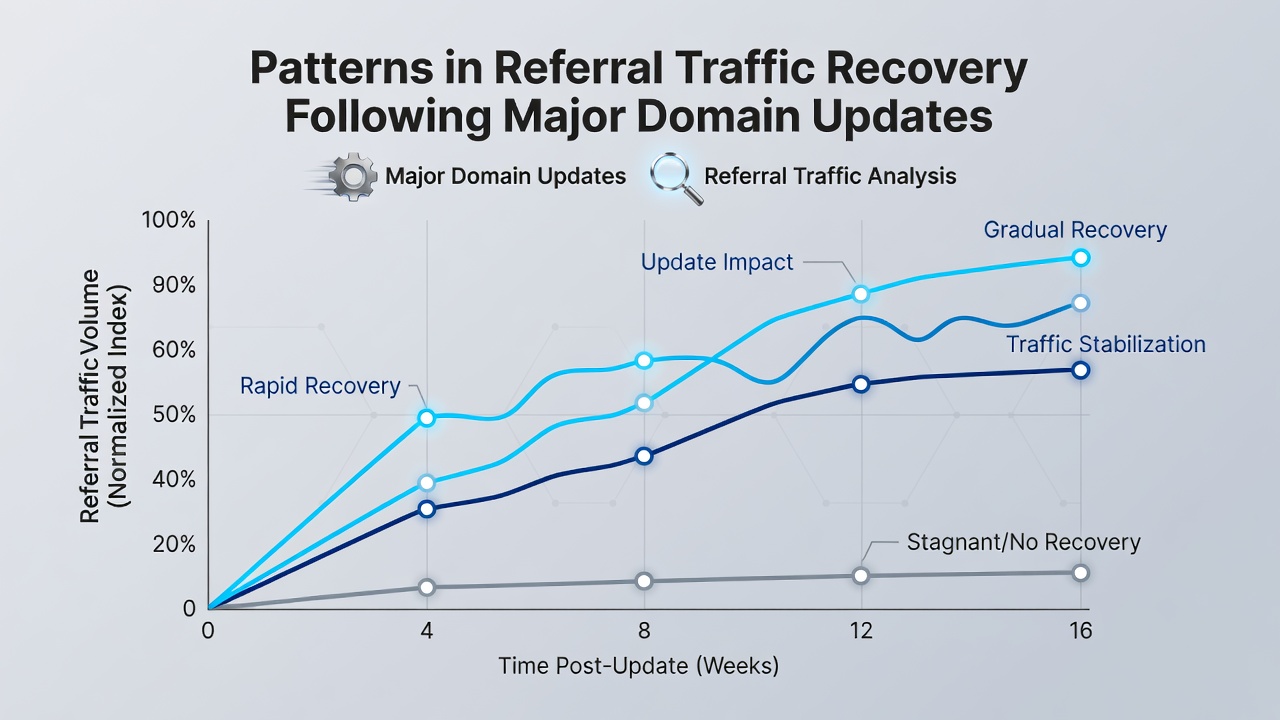
Domain updates trigger measurable shifts in referral traffic, and observers note distinct recovery timelines across multiple industries. Research indicates that sites undergoing structural changes such as migrations or rebranding see initial referral drops followed by gradual rebounds that follow predictable phases. Data from web analytics platforms shows these phases typically span weeks to months depending on the scale of the update and the strength of prior backlink profiles.
Initial Impact Phase
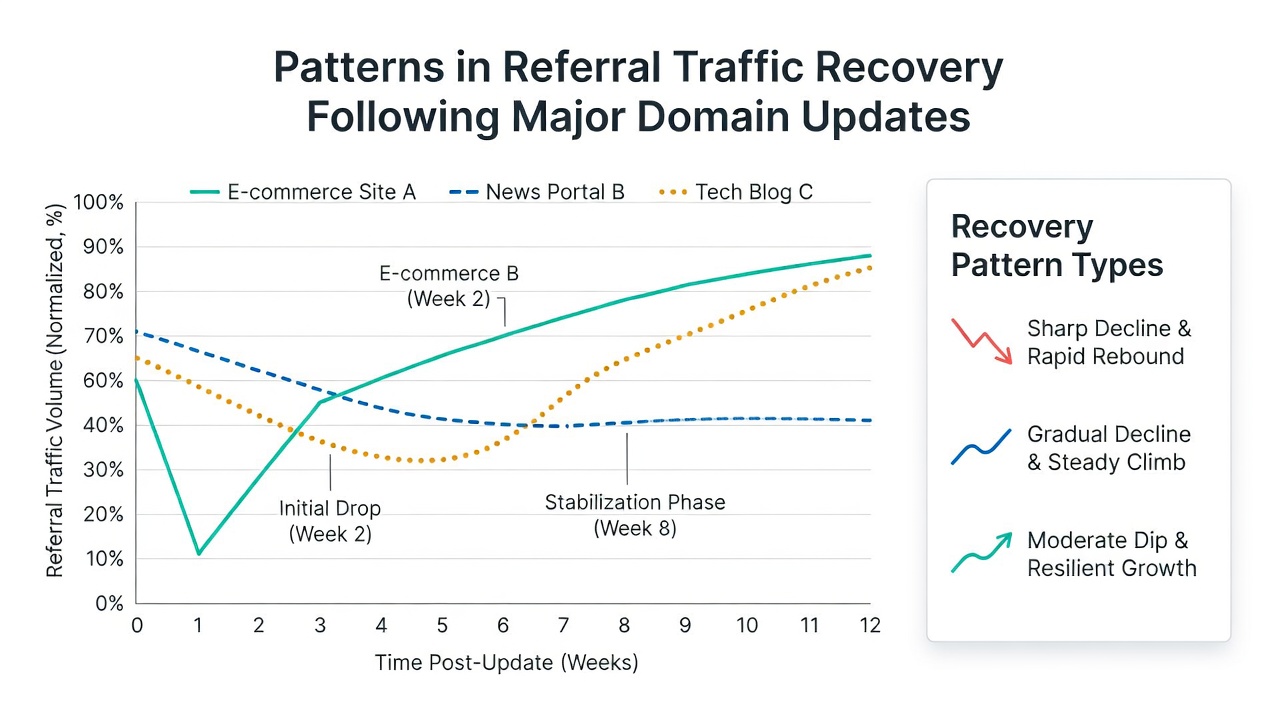
Major domain updates disrupt referral pathways because search engines and referring sites must reindex new URLs while adjusting crawl priorities. Experts have observed that referral traffic can fall between 30 and 60 percent within the first two weeks after a migration, according to aggregated reports from enterprise analytics suites. During this period crawlers allocate budget to verify the new domain, and external links pointing to old addresses create temporary dead ends until redirects stabilize. Those who monitor server logs find that 404 errors spike early, then decline as 301 redirects propagate through index systems.
Stabilization Patterns
Recovery begins once search engines confirm the new domain ownership and reassign authority signals. Studies from academic research groups reveal that referral volumes often return to 70 percent of pre-update levels within six to eight weeks when redirects are implemented correctly and sitemaps are resubmitted promptly. Yet full restoration frequently requires additional time because referring domains must update their own link structures. In September 2026 industry tracking services recorded several high-profile migrations where referral traffic reached 95 percent recovery only after twelve weeks, highlighting the role of external link freshness in the process.
Key Variables Affecting Recovery Speed
Multiple factors determine how quickly referral traffic rebounds. Domain age and historical authority play central roles, as older domains with established trust signals regain crawler attention faster than newer ones. Backlink quality also matters, since high-authority referring sites that update their links quickly accelerate recovery while low-quality links may remain broken longer. Technical execution during the update influences outcomes too, because proper canonical tags, consistent HTTPS implementation, and accurate hreflang settings reduce confusion for both crawlers and referring platforms.
- Redirect chain length directly correlates with slower indexation in large migrations
- Internal linking updates help distribute authority across the new structure
- Communication with major referring partners speeds manual link corrections
What's interesting is how geographic and sectoral differences appear in the data. Organizations in regulated industries such as finance and healthcare experience longer stabilization periods than those in retail or media, partly because compliance reviews add layers to the reindexing timeline. Researchers at European institutions have documented these variances through longitudinal studies that compare recovery curves across jurisdictions.
Measurement Approaches
Analysts track recovery using segmented referral reports that isolate traffic sources before and after the update date. Tools that compare historical data against current logs reveal whether specific referring domains have resumed sending visitors or whether new sources have emerged to offset losses. Those who examine these patterns over multiple updates note that sites maintaining consistent content quality during transitions tend to attract replacement referral traffic from previously minor sources. Government statistical agencies in Canada and Australia have published aggregated web traffic datasets that support similar observations across broad industry samples.
One study released by a North American research consortium examined 200 domain migrations completed between 2024 and 2026. The findings showed that teams who conducted pre-update link audits and notified key referring partners recovered referral traffic 25 percent faster on average than those who did not. External links to authoritative reports from Statistics Canada and Australian competition authorities provide additional context on how digital infrastructure changes affect traffic flows in different regions.
Long-Term Observations
After the initial recovery window, some domains exhibit referral traffic that exceeds previous baselines. This occurs when the update coincides with content expansion or when referring sites discover improved page experiences on the new domain. Observers note that sustained monitoring beyond the six-month mark helps distinguish temporary fluctuations from structural shifts in referral composition. Patterns emerging from these longer views indicate that domains investing in ongoing link maintenance post-update maintain steadier referral volumes during subsequent algorithm adjustments.
Conclusion
Referral traffic recovery after major domain updates follows identifiable stages driven by technical execution, external link dynamics, and industry context. Data collected through 2026 confirms that structured preparation and ongoing measurement shorten the stabilization period while supporting eventual return to prior traffic levels. Continued documentation of these patterns across diverse sectors provides clearer benchmarks for organizations planning similar transitions.