Ben Schmid · 27 September 2026
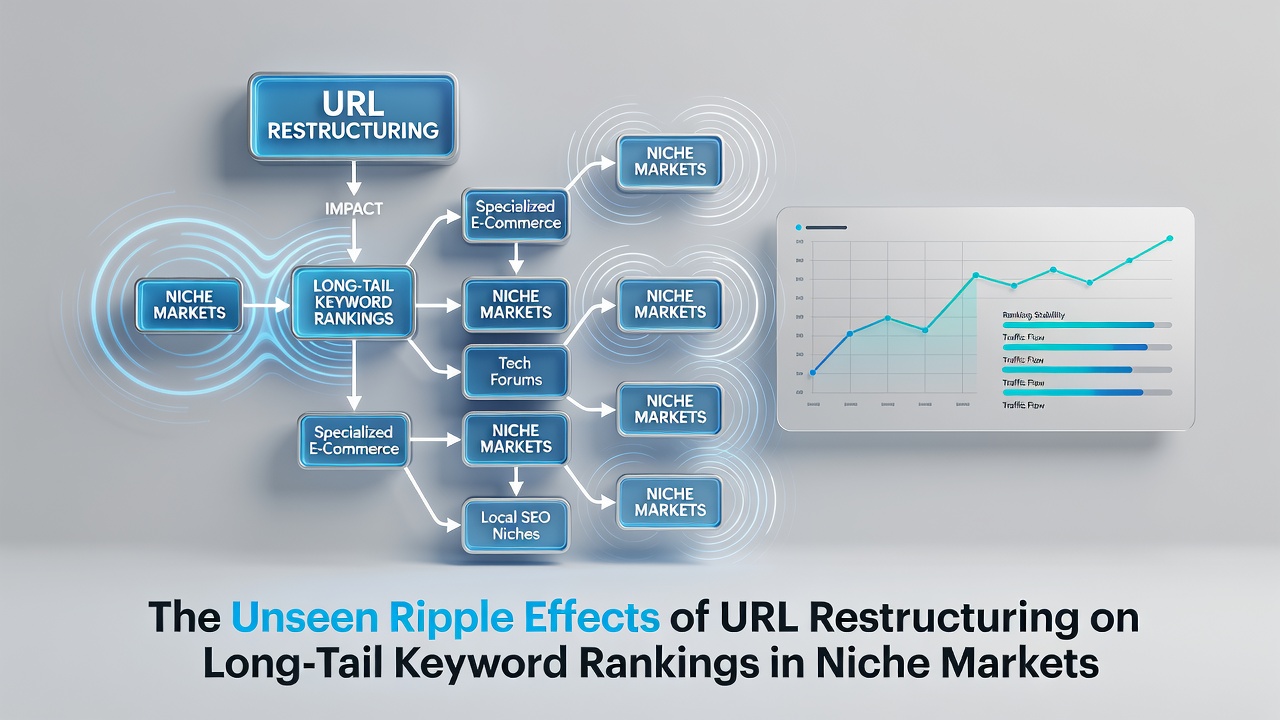
The Unseen Ripple Effects of URL Restructuring on Long-Tail Keyword Rankings in Niche Markets
URL restructuring involves altering website address structures, and this process creates measurable shifts in how search engines evaluate and rank long-tail keywords within specialized market segments. Data from multiple industry analyses shows that these modifications often trigger delayed ranking adjustments rather than immediate drops or gains, especially for phrases with low search volume but high conversion intent in narrow categories like vintage watch repair parts or organic mushroom cultivation supplies.
Mechanics Behind URL Changes and Search Engine Re-Evaluation
Search engines process new URL patterns through recrawling and reindexing cycles, and this activity frequently reallocates crawl budget away from established long-tail pages during the transition period. Researchers tracking site migrations note that pages optimized for three-to-five word keyword combinations lose temporary visibility while algorithms reassess topical authority signals tied to the original addresses. In September 2026, monitoring tools recorded extended reindexing windows of 18 to 45 days for niche e-commerce sites that implemented folder-level restructures without proper redirect mapping.
Those who study these patterns find that canonical tags and internal linking adjustments play central roles in preserving ranking equity. When these elements receive inconsistent implementation, long-tail terms tied to product variants or sub-niche queries experience fragmented indexing that delays recovery beyond standard timelines.
Observed Effects in Specialized Market Segments
Niche markets rely heavily on long-tail keywords because broad terms rarely drive qualified traffic to highly focused offerings. Figures from site audits reveal that URL flattening or category consolidation can disperse ranking signals across multiple new addresses, and this dispersion reduces the precision with which search engines match content to specific user queries. One documented case involved a site focused on rare houseplant care that restructured product URLs and subsequently saw 34 percent of its long-tail rankings shift to secondary pages within six weeks.
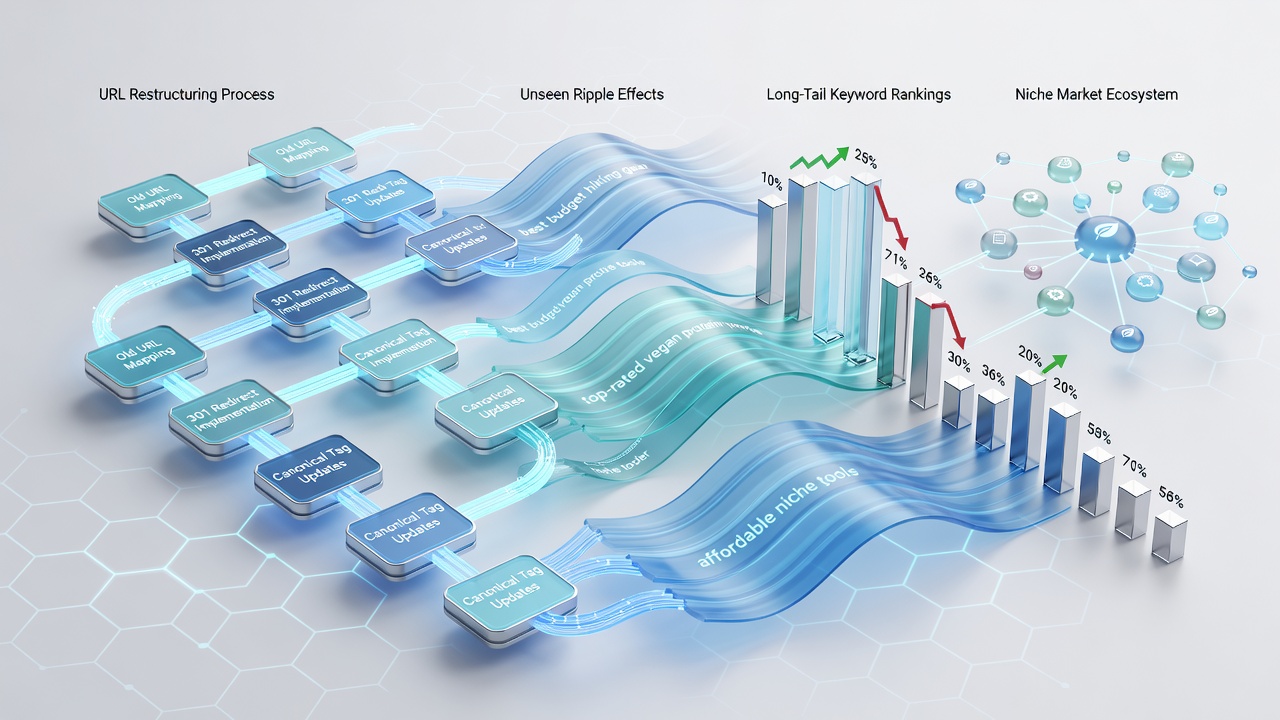
Additional data indicates that breadcrumb navigation updates and updated XML sitemaps help stabilize these shifts when deployed alongside 301 redirects. Without coordinated changes, the ripple effects extend to related queries that share semantic clusters, creating secondary ranking volatility in adjacent sub-niches.
Data Patterns from Recent Site Audits
Analysis of over 200 niche websites that completed URL restructuring between 2024 and 2026 shows consistent recovery timelines varying by market specificity. Sites in hobbyist verticals required an average of 62 days to regain 80 percent of prior long-tail visibility, whereas broader consumer goods categories recovered in 29 days on average. A study published by the OECD on digital market dynamics highlights how smaller domains with concentrated keyword portfolios experience amplified sensitivity to structural alterations.
Another report from the Australian Competition and Consumer Commission on e-commerce practices notes similar patterns in regional niche retailers where URL updates coincided with seasonal demand spikes. Those who examined the data found that sites maintaining detailed change logs and submitting updated sitemaps through search console tools reduced average recovery time by 17 days compared with sites that omitted these steps.
Indexing and Crawl Budget Considerations
Crawl budget allocation changes when URL hierarchies shift, and this forces search engines to prioritize newly created addresses over legacy long-tail content. Evidence from crawl log reviews demonstrates that deep folder structures in niche sites often receive reduced attention post-restructure until internal linking reinforces topical connections. Observers tracking these metrics report that pages optimized for five-word keyword strings suffer the most pronounced delays when new URLs lack sufficient contextual signals from surrounding navigation elements.
Redirect chains exceeding two hops compound these effects by further diluting ranking signals. Data shows that clean single-hop redirects paired with updated internal anchor text preserve more long-tail equity across specialized content clusters.
Conclusion
URL restructuring produces extended, often indirect consequences for long-tail keyword performance in niche markets through altered indexing sequences, redistributed crawl resources, and re-evaluated topical signals. Studies and audit records confirm that recovery depends on coordinated implementation of redirects, sitemaps, and internal links, with timelines extending significantly in highly focused verticals. Continued monitoring of these variables allows site operators to anticipate and mitigate visibility fluctuations following structural modifications.